How can I eliminate the 'Middleman Risk' in fragmented Vietnamese supply chains to guarantee MRL compliance and 100% farm-to-port traceability for my IQF and Puree shipments?
To eliminate supply chain "blind spots" and ensure MRL compliance, both sides must shift toward Vertical Integration: For Factories - Bypass brokers by signing direct, long-term contracts with farming networks (up to 2,000 hectares). Stationing engineers on-site to manage digital cultivation logs ensures Global GAP standards are met from soil to factory. For Sourcing Directors - Shift from "paperwork audits" to "field audits." Demand raw data, such as digital cultivation maps and direct purchase records with farmers, and prioritize suppliers with a strong ESG-driven mindset.
A purchasing director from a European food group sent me a message yesterday, his words filled with frustration. One of his IQF and fruit puree containers had just been seized at a European port. The reason? A violation of MRL (Maximum Residue Limit) standards. He urgently requested a traceability report from his Vietnamese factory supplier to clear customs.
The supplier’s response was a cold shower: "We apologize. To fill your volume at the end of the season, we had to buy extra raw fruits from local middlemen. We cannot trace exactly which farm this batch came from."
My friends, this is the most dangerous "gray zone" in international agricultural trade: the hidden intermediaries lurking behind seemingly modern, certified processing factories.
When global buyers look at Southeast Asia, they often put Vietnam, Thailand, and the Philippines on the scale.
Vietnam has an incredible, exclusive edge. Our soil and climate give Vietnamese fruits—whether processed into purees or frozen with IQF technology—a rich, authentic flavor profile that few can replicate. Combined with competitive labor costs and highly agile investments in modern processing facilities, Vietnam looks like a sourcing paradise on paper.
But here is our Achilles' heel: the "Broker" network.
In Thailand or the Philippines, multinational corporations have spent decades building massive, corporate-owned plantations or strictly monitored cooperatives with standardized protocols. Meanwhile, Vietnam’s agricultural landscape remains fragmented, split among millions of smallholder farmers.
This fragmentation creates a perfect breeding ground for local brokers or middlemen. Their priority is volume and immediate profit. They do not care about MRL compliance, they do not understand GlobalGAP, and they certainly do not care about protecting an international buyer’s brand reputation.
When clean raw materials are mixed with uncertified goods at intermediate collection points before entering the factory gates, all your expensive "Clean-Label" laboratory testing is neutralized right at the source.
I always say: high-tech processing machines mean nothing if we cannot control what happens in the field. If Vietnamese agricultural exports want to win globally, we must stop playing the short-term volume game with local brokers. We must build direct, transparent bonds with our farmers.
STRATEGIC SOLUTION: BYPASS THE MIDDLEMEN, ANCHOR TO THE FARM
To eliminate the "blind spot" in your supply chain, both International Buyers and Vietnamese factories must execute a radical restructuring:
1. For the Vietnamese Factory:
- Eliminate the Middlemen: We solve fragmentation through a "Vertical Integration" model. The Factory signs direct, long-term purchase contracts with a farming network covering up to 2,000 hectares.
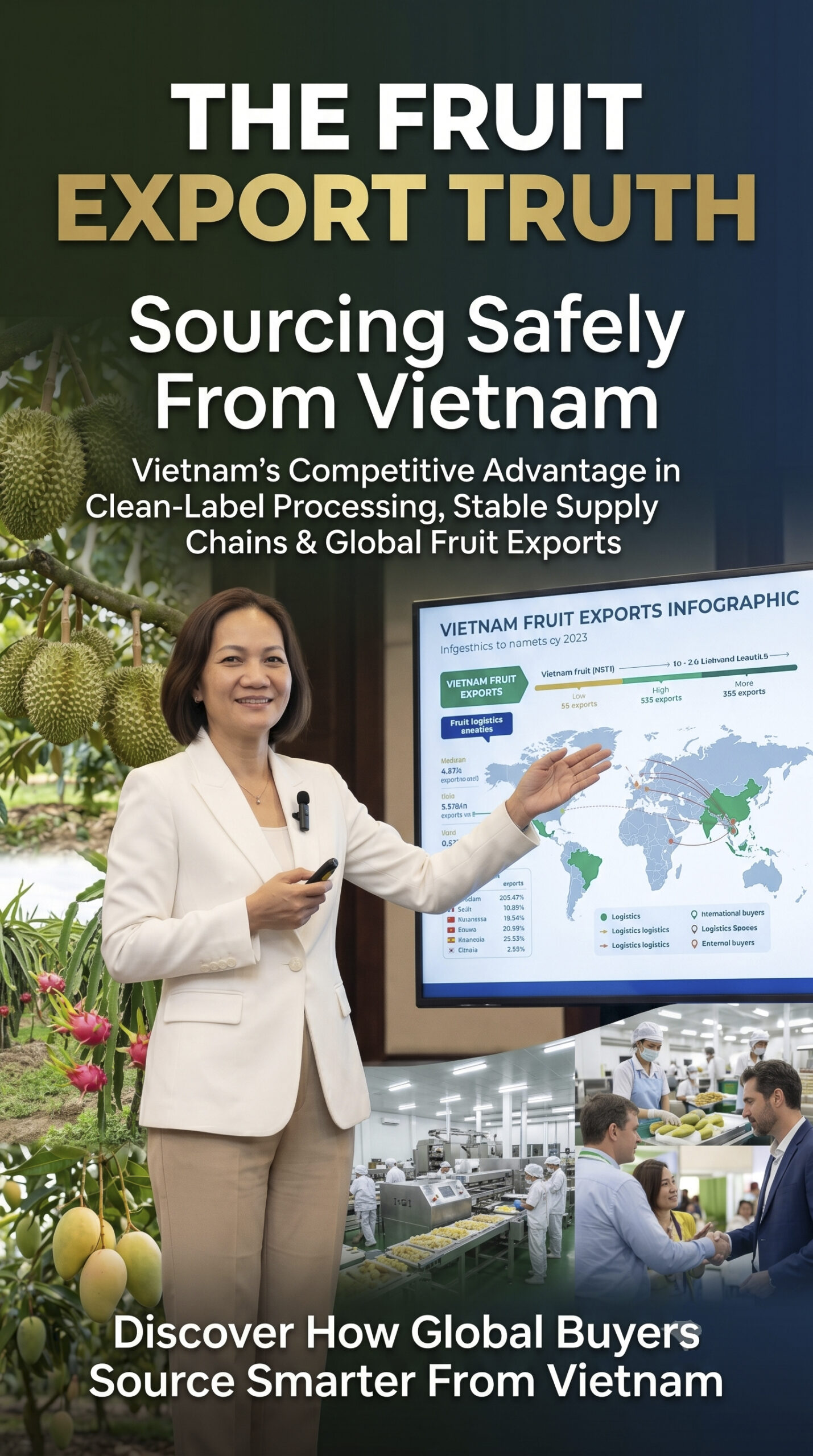
- End-to-End Control: The Factory’s team of agricultural engineers is stationed directly in the farming regions, managing digital cultivation logs and strictly controlling fertilizers and pesticide pre-harvest intervals to meet Global GAP standards. Post-harvest fruits are transported directly to a 5-hectare processing facility via specialized vehicles—bypassing all intermediate warehouses, middlemen and brokers. This is the only way the Factory can guarantee 100% supply chain visibility and protect the "True to Fruit" integrity for international partners.
2. For Strategic International Sourcing Directors (The Shift in Audit Strategy):
- Stop Auditing Paperwork, Start Auditing the Field: Don't just look at BRC, HACCP, or ISO certificates in a corporate office. Require your Vietnamese supplier to provide data: Where is the digital map of the cultivation area? What are the direct purchase records with farmers? What is the peak-season processing capacity of their upstream cold storage?
- ESG-Driven Supplier Screening: Partner with factories that prioritize the livelihood of farmers and soil protection as a core strategy. Suppliers with sustainable mindsets will inherently build barriers to eliminate speculative brokers.
A MESSAGE TO SOURCING DIRECTORS
A safe supply chain is the shortest one. A supplier capable of 10,500+ tons/year without deep roots in the farming regions will always leave you vulnerable when markets fluctuate

18-year experience in Import & Export - with a strong background in international commerce, I am confident in bringing my agro-export knowledge to friends and partners around the world - contributing in elevating the value of Vietnamese agriculture on the international stage.
Join Our Group to Learn & Share Toghether

Join our Comunity - Lifestyle IdeaSpace - Collaborative Space for Learning & Sharing – a space we’ve created for everyone to share, connect, and learn together.